Laura and I have spent pretty much our entire adult lives researching consciousness, exploring practices that invite us beyond our familiar awareness and listening to people describe their experiences. What continues to hold my attention is the moment when something I have understood as an idea becomes something I recognize within myself.
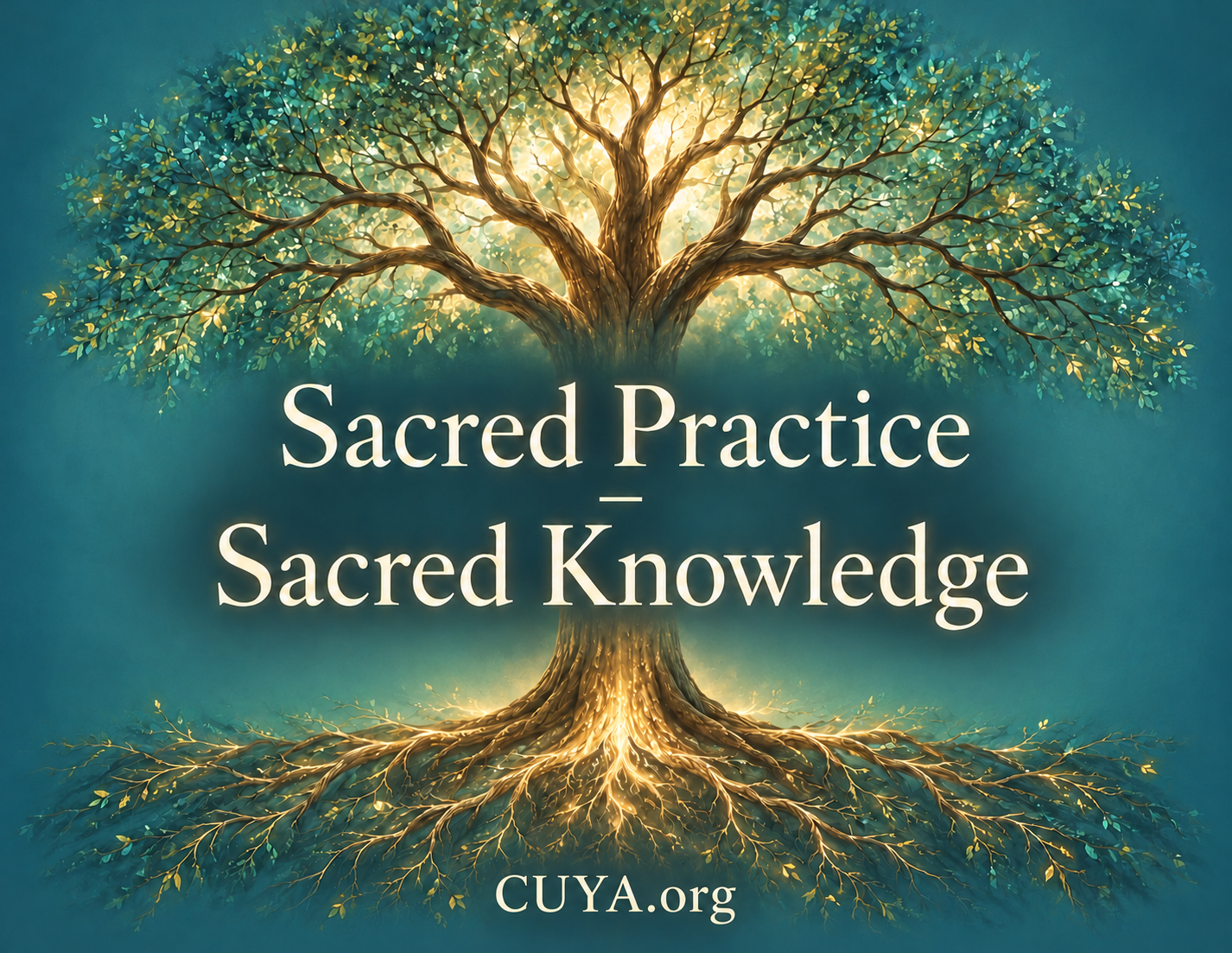
This is what I think of when I consider the relationship between sacred practice and sacred knowledge. Within spiritual traditions, practice and knowledge are ways of connecting with the divine.
One opens a way of entering; the other grows from what we encounter and learn to live with. Books, teachings, and conversations have an important place in this process. They give us language, offer direction, and introduce us to possibilities we would not have discovered alone. But there is a kind of knowing that asks us to participate. Sacred knowledge reaches beyond what we learn secondhand. It becomes our own through direct spiritual insight and lived experience.
The word sacred carries many associations. For me, it describes those moments when I feel a deeper relationship with life, when the world is no longer just something I am looking at or moving through. I feel involved in it. The boundary between my own life and the life around me becomes less rigid. What I call sacred knowledge begins in that relationship, and sacred practice is how I return to it.
Returning matters. It is easy to be moved by an experience and then become absorbed again in the demands of the day. We remember that something happened, yet struggle to carry its meaning into our lives. A regular practice gives that experience a place to take root. We return to silence, prayer, mindfulness, or an embodied practice, bringing whatever is happening in our lives with us. Over time, the practice becomes familiar enough that we can begin listening more deeply.
This asks something different of us than the habits many of us have learned. I know how easily I can approach even an inner practice as another task to accomplish. The same drive that helps me manage a busy life can follow me into the very space where we have come to listen.
It seems clear that we do not transform ourselves by moving faster. We transform through the attention we give to what matters and our willingness to stay with it. Holding a vision means remembering the kind of relationship we want to have with life, then allowing that vision to shape our choices.
Sacred practice invites a shift in how we relate to the world. In our work with Ritual Postures, the body belongs at the center of that shift. Laura and I invite people to attend to an experience that involves the whole person. We are open to sensations, images, emotions, and the unexpected ways an experience unfolds.
This is one reason the word ritual matters to me. The form creates a place for our attention, while intention gives that attention direction.
Ritual Postures offers a specific way to enter that relationship. The structure gives us a beginning, a period of focused experience, and a return. Reflection afterward gives us time to integrate what we encountered. I value that return as much as the experience itself. A powerful image or a feeling of profound connection asks something of us when we come back to ordinary life. What do we do with it? How does it change the way we approach everyday tasks, respond to difficulty, or care for the world around us?
For me, this is where sacred knowledge becomes lived knowledge.
An experience deepens when it finds expression in patience, compassion, and the ability to remain present when life is uncomfortable. Embodied empathy means allowing our awareness of another person to affect how we meet them. We feel the relationship and respond from it. Our practice reaches beyond the time we set aside for it.
Building on the human capacity to learn through participation, to carry experience through the body, and to share wisdom through relationships and practice. It lives in the ways we gather, listen, remember, and make meaning together.
When I think about the changes we want to bring into the world, I come back to alignment with the sacred. The work asks us to notice whether our actions reflect what we hold meaningful. I think of resonance as that felt connection between what we know within ourselves and how we choose to live. It gives our effort direction and asks us to consider the relationships we are shaping along the way.
Sacred practice gives me a way to stay grounded while remaining open to a world beyond my eyes. Sacred knowledge grows through that openness and through the responsibility of living what I have learned. To dance between worlds, as I often describe it, is to enter an expanded experience and return with both feet in our shared human life. The knowledge becomes part of us when it changes how we meet the life before us.



 As a 501(c)(3) nonprofit educational organization, we depend on your support to continue our work. We invite you to join our community and be part of this ongoing journey of exploration and discovery. more….
 The name “CUYA” carries with it both history and vision. Rooted in our origins as the Cuyamungue Institute, it now also serves as an acronym — C.U.Y.A. — a guiding symbol that unites our mission: