

If self-authorship is the path, then practice is the way we walk it. And like any meaningful practice, it begins with simple, intentional acts—small gestures that remind us we are the ones shaping our inner life.
Begin by creating a space to listen: Begin by creating a space to listen: The first step is establishing sacred space. Setting a space to foster connection, peace, and meaning by separating it from the mundane. To create a sacred space, select a dedicated area, and intentionally fill it with meaningful objects like candles, crystals, plants, and spiritual symbols. Once set up, establish a daily ritual in the space to cultivate a sense of peace, mindfulness, and spiritual connection. The act of creating a sacred space is a gentle reminder that your spiritual self deserves time, attention, and care. A sacred space doesn’t need to be elaborate, more important that it feels intentional. It can simply be a quiet corner, a place where your breath can settle and your attention can soften.
Posture: Bring your body into a Ritual Posture shown below. Allow the posture to hold you, to become the container where the noise of the world gently falls away.
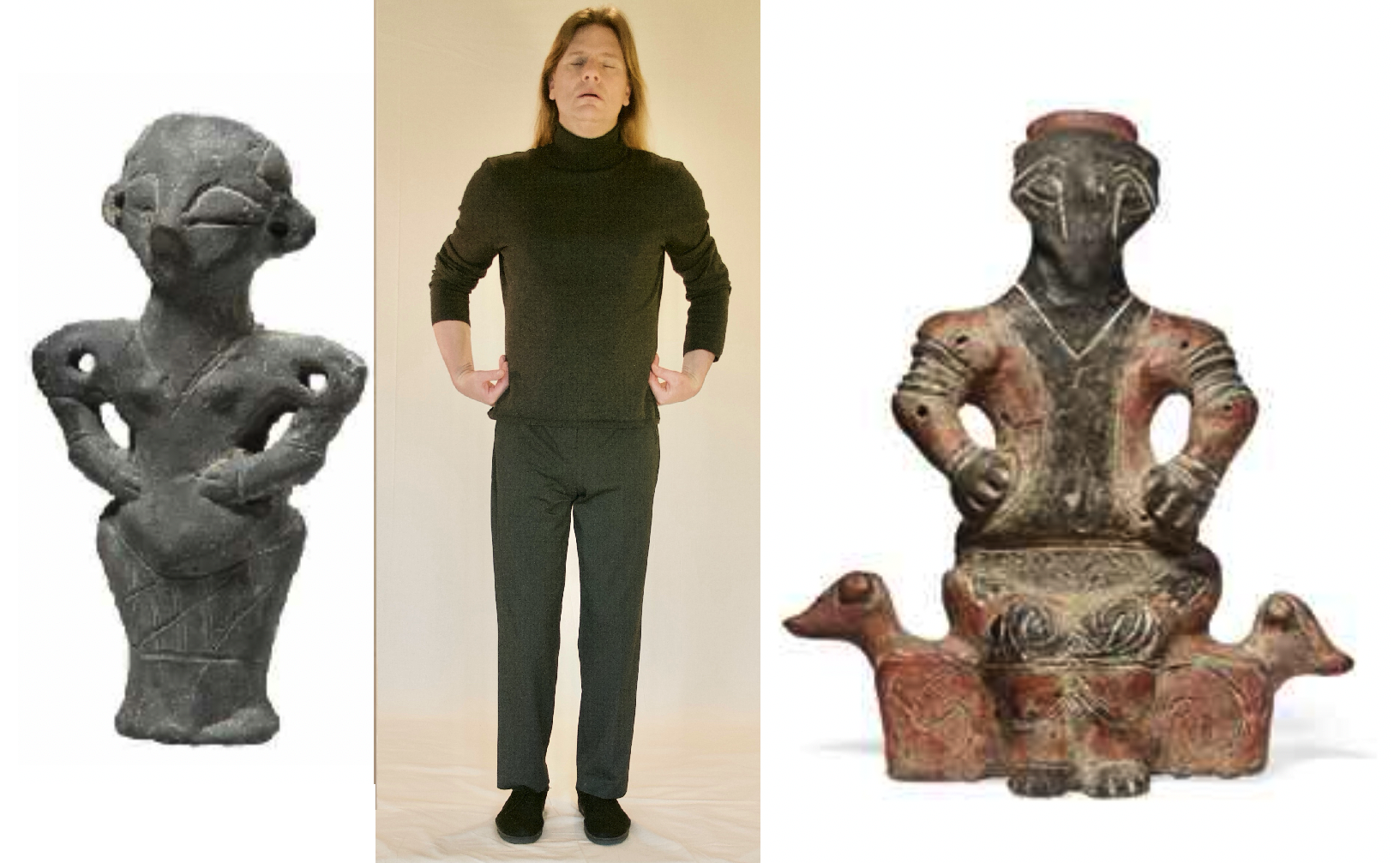
Let the body speak first.
Instead of searching for meaning or insight, just notice. Sensations. Emotions. Images. Subtle shifts. These are the raw materials of your inner narrative—the deeper truths that don’t arrive through thought, but through experience. Trust what arises without trying to interpret it too quickly. Self-authorship begins with honest seeing.
Ask the small but essential questions.
From within the posture, or in the quiet afterward, gently inquire:
What in my life feels true to me right now?
What feels inherited, expected, or outgrown?
Where am I being called to step more fully into myself?
These questions aren’t meant to be answered all at once. We ask a question and let go. They are invitations—ways of turning toward your own wisdom.
Notice where you’ve handed away the pen.
We all, at times, allow others to write parts of our story. Pay attention to the roles, beliefs, or obligations that feel heavy or misaligned. Self-authorship is not about rejecting our histories, but about choosing what belongs in the next chapter.
Let clarity come in its own time.
Ritual Postures don’t rush revelation. They create an inner spaciousness where truth can surface naturally. Be patient with the unfolding. Self-authorship is less about decisive conclusions and more about a steady return to what feels authentic.
Anchor insights in action.
Even the smallest shift—a boundary honored, a truth spoken, a pattern gently released—becomes a sentence written in the story of your becoming. Over time, these choices accumulate, aligning you more fully with your inner compass.
The Ritual of Journaling: Give your insights a place to land.
Before closing your practice, take a few minutes to journal. Writing becomes a bridge between the inner experience and the outer life—a way of honoring what surfaced, even if it feels incomplete or mysterious. You might capture a single image, a phrase, a sensation, or a moment of clarity. There is no right way to do this. The purpose is simply to give voice to what emerged, to witness it with compassion and curiosity. Over time, these written reflections become a map of your unfolding, revealing patterns, shifts, and invitations you might have otherwise missed.