
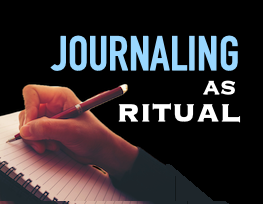

Documentation, Integration, and the Continuity of Experience
Author – Paul Robear ©2025
Journaling has long been recognized as a practice of reflection, self-inquiry, and gratitude. Within the context of Ritual Body Postures, it becomes something more: an extension of the experience itself. It is not merely a record of what happened, but a continuation of the dialogue opened when the body enters a posture and consciousness begins to shift.
When we assume a Ritual Posture, we intentionally step out of ordinary perception. The body becomes still, receptive, and aligned in a way that opens a doorway into an alternate way of knowing. In this state, images arise, sensations speak, emotions surface, and insights emerge that are often difficult to capture through linear thought alone. Journaling offers a way to honor that flow of wisdom by giving it form.
Rather than trying to analyze or interpret the experience too quickly, journaling invites us to document what arose—exactly as it appeared. Words, fragments, symbols, colors, memories, bodily sensations, or a simple feeling tone can all be recorded. In doing so, we affirm that what was encountered has value, even if its meaning is not yet clear.
This act of documentation serves several important purposes. First, it grounds the experience. Altered states of consciousness can feel expansive, elusive, or dreamlike. Writing anchors them in the body and the present moment, helping bridge the inner world and everyday life. Over time, patterns begin to reveal themselves—recurring images, familiar presences, or themes that quietly weave through multiple posture experiences.
Second, journaling becomes a powerful tool for self-exploration. The wisdom accessed through Ritual Postures often speaks in a symbolic language rather than direct instruction. By returning to journal entries days, weeks, or months later, new layers of understanding emerge. What once felt mysterious may begin to resonate with life events, relationships, or internal shifts happening beyond the practice itself.
Importantly, journaling does not need to rely solely on words. Many posture experiences are visual, somatic, or symbolic in nature. Drawing, sketching, or even simple shapes and marks on the page can often express what language cannot. An image may capture the essence of an encounter more faithfully than a paragraph of explanation. Over time, these visual records become a rich archive of inner landscapes encountered through the practice.
Journaling, then, is not separate from the Ritual Posture – it is part of the ritual. It completes the arc of the experience by allowing integration to begin. As insights move from the body to the page, they begin to inform how we see ourselves and the world around us. This process gently shifts mindset, deepens clarity, and strengthens the relationship between inner wisdom and lived experience.
Gratitude also finds a natural place in this process. Taking a moment to acknowledge the experience—whatever it was—cultivates reverence and respect for the practice. Gratitude is not reserved only for moments of clarity or beauty; it can also include discomfort, confusion, or emotional release. Each experience carries its own teaching.
My wife, Laura Lee, expands on how gratitude is an element of the Ecstatic experience. She adds: “I’m a long-time journaler. It’s where I can have a conversation with myself, giving voice to those parts needing safe space to surface. When Paul and I lead a session in Ritual Postures, I journal first my own trance experience, and then as we go around the circle, I’m taking notes on each members of the group’s experiences. With rare exception, each journey ends with flourishing, with a heaping helping of compassion and empathy, bliss, release and resolve — and gratitude for the journey. Gratitude and love for one another, for all of life, for the Universe, and that which brought us and all of this forth.
Gratitude Journals are popular. Noting what we are grateful for in life, calls forth gratitude. Identifying what we are grateful for is a beautiful and meaningful practice. The embodied practice of Ritual Postures calls forth gratitude through direct experience, often opening the floodgates on an astonishing, multi-layered depth as the body’s receptor sites open up all on their own, without effort, as a process, an accord, a becoming. This is gratitude born not from a thought process but direct beam bestowed by a Universe showering its appreciation upon us. Filled to the brim and overflowing. can only return this in kind.
One indicator of the depth of our trance experience, though we may not even note it in every journaled experience, is how we can read a long ago experience. We can find it evokes more than a memory, as it stirs the depths, now anchored in words and sketches. The act of taking what can be as fleeting as a dream — for indeed trance arrives in the hybrid state of a ‘waking dream’ and processing it through the verbal centers of our brain, the spoken word, the pen in hand, integrates our Alternate Reality experience with our everyday, Ordinary Reality. It brings it home, to our ‘bones’, our body, mind, soul, to be accessed again in the retelling. Journaling and sharing brings the gifts of our spirit journeys as an offering to our community, to our collective energetic field, and allows us all to share in the blessings, lessons, and energetic healing.”
In this way, journaling is a critical step of ritual – providing integration of the practice: a quiet space where the body’s knowing is listened to, honored, and remembered. It reminds us that the doorway opened in our experience does not close when we release the posture—it continues to speak, if we are willing to listen.
“Journaling completes the ritual by giving form to what the body has already known.” Paul Robear
The name “CUYA” carries with it both history and vision. Rooted in our origins as the Cuyamungue Institute, it now also serves as an acronym — C.U.Y.A. — a guiding symbol that unites our mission:
C — Consciousness: The field of shared awareness that arises in Collective Presence, where the “We” awakens beyond the “I” – moving from the “Me to the We.”
U — Unity: Our alignment with the Cycles of Nature and the rhythms of the cosmos, reminding us that we are woven into a greater fabric of reality. This sense of unity reminds us that our awareness is the shared consciousness that connects all living beings.
Y — Your Awakening: The inner journey of Embodiment and Wisdom, where through direct experience the body remembers. At the CUYA Institute, this awakening is nurtured through Ritual Body Postures and ecstatic trance, where the body itself becomes the doorway to wisdom, presence, and transformation.
A — Ancestral Wisdom: Roots. Our connection to Sacred Lineage, honoring those who walked before us and rooting us in belonging and continuity. Our founder, anthropologist Felicitas D. Goodman looked to some of the oldest, most authentic ancestral records we have — the world’s collection of early and indigenous art — and decoded selected artifacts as embodied “ritual instructions.”
Together, the Four Pathways of C.U.Y.A. — Consciousness, Unity, Your Awakening, and Ancestral Wisdom — form a single tapestry of practice. They remind us that awakening is not an abstract idea but something we live: through the body in Your Awakening, through nature’s cycles in Unity, through community in shared Consciousness, and through the guidance of Ancestral Wisdom.