
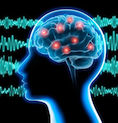
 One of the most intriguing aspects of Ritual Body Postures is the consistent pattern of physiological and neurological changes reported by participants during posture-induced expanded states of consciousness. Since the early days of Dr. Felicitas Goodman’s research, several scientific investigations have explored how these practices affect the body and brain.
Early Physiological Research
In 1983, researcher Ingrid Mueller at the University of Munich examined physiological changes occurring during posture-induced trance experiences. Her studies found a distinctive pattern among participants: levels of the stress-related hormones cortisol, epinephrine, and norepinephrine initially increased and then declined significantly during the course of a standard fifteen-minute session. This pattern suggested a movement from heightened activation into a deeply relaxed yet alert state.
Mueller also observed increased levels of beta-endorphins, naturally occurring neurochemicals associated with pain reduction, feelings of well-being, and enhanced mood. These findings may help explain why many participants report feelings of peace, clarity, vitality, and emotional balance following a Ritual Body Posture session.
Additional physiological changes included a reduction in blood pressure accompanied by an increase in pulse rate—a somewhat unusual combination that indicates a complex shift within the autonomic nervous system. Notably, these patterns appeared consistently across participants regardless of their previous experience with the practice or the specific posture employed.
Brain Activity and Expanded Consciousness
Further research was conducted by Professor Giselher Guttmann at the University of Vienna, who investigated changes in brain activity during Ritual Body Posture sessions. Using direct-current (DC) potential measurements—a method that captures very slow shifts in cortical electrical activity—Guttmann and his colleagues observed measurable changes associated with participants’ subjective reports of trance depth.
Participants who reported more intense experiences often demonstrated shifts toward increased cortical negativity, while those reporting milder experiences showed little change or slight shifts in the opposite direction. The study also identified an association between these negative DC shifts and increased theta-wave activity in some experienced practitioners.
Theta brainwave activity is commonly associated with meditation, dreaming, creativity, memory processing, and other altered or expanded states of awareness. While the study involved a relatively small number of participants and was exploratory in nature, the findings suggested that distinct neurophysiological processes may accompany Ritual Body Posture experiences.
 A Continuing Area of Inquiry
 A Continuing Area of Inquiry
These pioneering studies provided some of the first scientific evidence that Ritual Body Postures are accompanied by measurable changes in both physiology and brain function. While the research remains preliminary by contemporary scientific standards, it offers an important foundation for understanding how specific body positions, rhythmic stimulation, and focused intention may influence consciousness.
Today, advances in neuroscience, brain imaging, and psychophysiology offer exciting opportunities for further exploration. As research continues to evolve, Ritual Body Postures remain a unique field of inquiry at the intersection of anthropology, neuroscience, embodied cognition, and the study of human consciousness.
Embodied Cognition
Contemporary research in anthropology and the cognitive sciences increasingly supports a view that has long been central to the work of CUYA: the body is not merely a vehicle for consciousness but an active participant in shaping it. Studies in embodied cognition suggest that posture, movement, gesture, and sensory engagement influence perception, emotion, memory, and thought. This growing body of research provides a modern scientific framework for understanding how Ritual Body Postures serve as gateways to expanded states of awareness—a discovery that Dr. Felicitas Goodman began exploring decades before the concept of embodied cognition entered mainstream academic discourse.