
Also see this article: The Key Discoveries
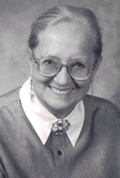 Dr. Felicitas D. Goodman (1914–2005)
Founder of the CUYA – The Cuyamungue Institute
Dr. Felicitas D. Goodman was a pioneering anthropologist, linguist, author, and consciousness researcher whose groundbreaking work explored altered states of consciousness, ecstatic trance, ritual body postures, and humanity’s ancient relationship with the sacred. Founder of CUYA – the Cuyamungue Institute, her work bridged anthropology, spirituality, ritual practice, and direct human experience in ways that continue to influence seekers, researchers, and practitioners around the world.
Through her interdisciplinary research, Dr. Goodman helped open new conversations about ecstatic experience, ritual healing, trance, symbolism, and the role of embodied practices within human culture. Her work remains one of the most significant modern explorations of ritual posture and ecstatic trance traditions.
Early Life and Education
Felicitas Maria Johanna Daniels was born on January 30, 1914, in Budapest, Hungary, to ethnic German parents. She was the elder of two children. Although her family was Lutheran, she received much of her early education through the Roman Catholic Ursuline order.
As a young woman, she attended the University of Heidelberg in Germany, where she earned a degree in interpretation and translation in 1936. During her studies, she met her future husband, Glenn H. Goodman, an American from Ohio.
In 1947, Felicitas and Glenn Goodman immigrated to Columbus, Ohio, together with their first three children. Glenn later became a professor of German at The Ohio State University. During these years, Felicitas taught German and English while also working as a translator of scientific publications. Their fourth child was born several years later.
In midlife, after raising her children, Felicitas returned to graduate school at The Ohio State University. She earned a master’s degree in linguistics in 1968 and completed her doctorate in cultural anthropology in 1971.
From 1968 until her retirement in 1979, Dr. Goodman taught linguistics, cultural anthropology, and comparative religions at Denison University in Granville, Ohio.
Research into Glossolalia (“Speaking in Tongues”)
One of Dr. Goodman’s earliest and most influential contributions to anthropology involved the study of glossolalia, commonly referred to as “speaking in tongues.”
As a linguist entering the field of anthropology, she became fascinated by reports of ecstatic religious speech occurring within Pentecostal communities. At the time, many scholars dismissed such vocalizations as unintelligible or meaningless speech. Dr. Goodman approached the phenomenon differently.
Working under anthropologist Erika Bourguignon at The Ohio State University, she analyzed recordings of glossolalia from Pentecostal groups in Ohio, Texas, and the Caribbean. Her research led her to propose that the distinctive rhythm, intonation, breathing patterns, and phonetic structures associated with glossolalia reflected measurable physiological and psychological shifts occurring during altered states of consciousness.
To further explore these patterns cross-culturally, Dr. Goodman conducted fieldwork among Spanish-speaking Pentecostal communities in Mexico City and later among Maya-speaking Pentecostal groups in Yucatán. Across cultures and languages, she observed striking similarities in vocal patterns occurring during trance states.
Her landmark publication, Speaking in Tongues: A Cross-Cultural Study of Glossolalia (University of Chicago Press, 1972), became one of the foundational anthropological studies of ecstatic religious speech.
Her later work, Maya Apocalypse: Seventeen Years with the Women of a Yucatán Village (Indiana University Press, 2001), reflected her long-term relationship with Maya communities and her ongoing interest in religious experience, culture, healing, and transformation.
Ecstatic Trance and Ritual Body Postures
Dr. Goodman’s most widely recognized contribution to anthropology and consciousness studies emerged through her research into ecstatic trance and ritual body postures.
Throughout her life, she remained deeply interested in visionary and trance experiences. In her writings, she described how such experiences had been present during her childhood and later re-emerged as a central focus of her scholarly and personal exploration.
She became increasingly interested in how cultures throughout history intentionally entered altered states of consciousness through ritual practices such as chanting, drumming, breath, movement, fasting, prayer, and ceremonial posture.
During her research, Dr. Goodman began noticing recurring body positions represented in ancient statues, figurines, cave art, ceramics, and ritual imagery from Indigenous and ancient cultures throughout the world. Rather than viewing these postures as merely decorative or symbolic, she proposed that many functioned as ritual instructions — physical positions intentionally used to facilitate altered states of consciousness.
This insight became one of the defining contributions of her career.
Working together with students and colleagues, she developed an experimental ritual framework involving rhythm, breath, focused attention, and specific postures. Participants repeatedly reported entering vivid altered states involving symbolic imagery, visionary experiences, emotional release, encounters with archetypal themes, and experiences of expanded awareness.
Dr. Goodman referred to these practices as ecstatic trance postures or ritual body postures.
Her work suggested that posture itself may influence human consciousness in profound ways and that embodied ritual practices may represent one of humanity’s oldest spiritual technologies.
Among her most influential books in this area are:
Ecstasy, Ritual and Alternate Reality: Religion in a Pluralistic World (1988)
Where the Spirits Ride the Wind: Trance Journeys and Other Ecstatic Experiences (1990)
Ecstatic Body Postures: An Alternate Reality Workbook (1995)
My Last Forty Days: A Visionary Journey Among the Pueblo Spirits (1997)
Her research also helped inspire later interdisciplinary conversations involving anthropology, psychology, consciousness studies, somatic practice, spirituality, neurophysiology, ritual healing, and embodied cognition.
Founding the Cuyamungue Institute
After visiting northern New Mexico in the early 1960s, Dr. Goodman developed a deep connection to the landscape and the living presence of Pueblo culture.
In 1964, she purchased land in the area known as Cuyamungue, located within the Pojoaque Valley north of Santa Fe. She recognized something profoundly unique about the land — not only its ecological beauty and expansive silence, but also its spiritual depth and historical resonance.
Over the following years, the property gradually evolved into a retreat, research, and educational center dedicated to the exploration of altered states of consciousness and ritual experience.
In 1978, Dr. Goodman formally established the Cuyamungue Institute as an independent educational and research organization devoted to the study of ecstatic trance, ritual body postures, sacred experience, and direct spiritual practice.
The Institute became an international center for workshops, research gatherings, experiential learning, and cross-cultural exploration of ritual and consciousness. Participants traveled from around the world to study with Dr. Goodman and engage directly with her work.
Throughout the decades, the Cuyamungue Institute also served as a steward of hundreds of acres of protected piñon-juniper landscape within the Pojoaque Valley.
A Vision Rooted in Direct Experience
Central to Dr. Goodman’s work was the belief that human beings possess an innate capacity for direct spiritual experience.
She emphasized that ritual, posture, rhythm, breath, sound, and intentional awareness could help individuals move beyond ordinary patterns of perception and access expanded states of consciousness associated with healing, insight, creativity, and transformation.
Her work encouraged people to move beyond purely intellectual understandings of spirituality and instead engage experience directly through embodied practice.
Although her interpretations of ecstatic experience and spirit encounter reflected her own worldview and anthropological framework, her work opened important interdisciplinary conversations about consciousness, ritual, symbolism, and the role of altered states throughout human history.
Legacy and Continuing Influence
Dr. Goodman passed away on March 30, 2005, leaving behind a remarkable legacy of scholarship, experimentation, teaching, and spiritual inquiry.
Today, her work continues through the ongoing activities of CUYA – the Cuyamungue Institute under the direction of Paul and Laura Lee Robear, as well as through practitioners, researchers, educators, and communities around the world who continue exploring ritual body postures and ecstatic trance traditions. In-residence training continues at the new home of the institute in Sedona Arizona.
Her contributions helped expand modern understanding of:
- Altered states of consciousness
- Ritual and embodied spirituality
- Ecstatic trance traditions
- Cross-cultural religious experience
- Ritual healing practices
- The anthropology of consciousness
- The relationship between posture and human awareness
Dr. Goodman’s work remains especially important because it bridged scholarly inquiry with lived experience. Rather than approaching ecstatic states solely as abstract subjects of study, she invited participants to explore these states directly through structured ritual practice.
Her legacy continues to inspire those seeking deeper presence, embodied spirituality, creative insight, healing, and renewed relationship with the sacred dimensions of life.
Selected Books and Publications
Major Books
- Speaking in Tongues: A Cross-Cultural Study of Glossolalia (University of Chicago Press, 1972)
- The Exorcism of Anneliese Michel (1981)
- Ecstasy, Ritual and Alternate Reality: Religion in a Pluralistic World (Indiana University Press, 1988)
- How About Demons?: Possession and Exorcism in the Modern World (Indiana University Press, 1988)
- Where the Spirits Ride the Wind: Trance Journeys and Other Ecstatic Experiences (Indiana University Press, 1990)
- Ecstatic Body Postures: An Alternate Reality Workbook (Bear & Company, 1995)
- My Last Forty Days: A Visionary Journey Among the Pueblo Spirits (1997)
- Maya Apocalypse: Seventeen Years with the Women of a Yucatán Village (Indiana University Press, 2001)
- Where the Spirits Ride the Wind: Spirit Journeys and Other Ecstatic Experiences, Indiana University Press, Bloomington, 1990.
- Ecstasy, Ritual, and Alternate Reality: Religion in a Pluralistic World, 1988
- Speaking in Tongues: A Cross-Cultural Study of Glossolalia, The University of Chicago Press, Chicago, 1972.
- My Last Forty Days: A Visionary Journey among the Pueblo Spirits, 1997.
- Disturbances in the Apostolic Church: A Trance-Based Upheaval in Yucatán, In Trance, Healing, and Hallucination: Three Field Studies in Religious Experience, by Felicitas D. Goodman, Jeannette H. Henney, and Esther Pressel, Wiley Interscience, New York, 1974.
- The Exorcism of Anneliese Michel, Doubleday, New York, 1981 (translated into German and French)
- How About Demons? Possession and Exorcism in the Modern World, Indiana University Press, Bloomington and Indianapolis, 1988. (translated into German)
- Trance Der uralte Weg zum religioesen Erleben, Gütersloher Verlagshaus, Gerd Mohn, 1992. (translated into Dutch, Hungarian, and Spanish)
- Maya Apocolypse: Seventeen Years with the Women of a Yucatan Village Indiana University Press, Bloomington and Indianapolis, 2001.
- Possible Physiological Mechanisms for Some Cases of Faith Healing, Medikon 3(6/7):39-41, 1974.
- States of Consciousness: A Study of Soundtracks. Journal of Mind and Behavior 2:209-219, 1981.
- Body Posture and the Religious Altered State of Consciousness: An Experimental Investigation, Journal of Humanistic Psychology, 26:81-118, 1986.
- A Trance Dance with Masks, The Drama Review, 34(1):102-113, 1990.
- Ritual Body Postures and Ecstatic Trance: Implicit Myths and Healing, Yearbook of Cross-Cultural Medicine and Psychotherapy, 1998/99: 43-50.
- Ritual Body Postures, Channeling, and the Ecstatic Trance, Anthropology of Consciousness 10 (1): 54-59.
• 1945: Die Blaue Brücke. Fairy Tales by Felicitas Goodman. Karlsruhe: Schwerdtfeger Publishing House.
• 1965: “Immer noch…” A Poem. P. 47 in Um den Schlaf Gebracht. Karlsruhe: Rüdiger.
• 1969: “Phonetic Analysis of Glossolalia in Four Cultural Settings.” Journal for the Scientific Study of Religion. 8: 227–239.
• 1969: “Glossolalia: Speaking in Tongues in Four Cultural Settings.” Confinia Psychiatrica 12: 113–129.
• 1971: “Glossolalia and Single Limb Trance: Some Parallels.” Psychotherapy and Psychosomatics 19: 92–103.
• 1972: Speaking in Tongues: A Cross-cultural Study of Glossolalia. Chicago: University of Chicago Press.
• 1973: “Glossolalia and Hallucination in Pentecostal Congregations.” Psychiatria Clinica 6: 97–103.
• 1973.: “The Apostolics of Yucatan: A Case Study of a Religious Movement.” In Religion, Altered States of Consciousness, and Social Change. Erika Bourguignon, ed. Columbus, OH: Ohio State University Press, pp. 178–218.
• 1973: “Limits to Cultural Conditioning: Glossolalia in the United States in Cross-Cultural Perspective.” Paper presented to the 72nd Annual Meeting of the American Anthropological Association, New Orleans, 29 November 1973.
• 1974: “Disturbances in the Apostolic Church: A Trance-Based Upheaval in Yucatán.” In Trance, Healing and Hallucination by Felicitas Goodman, Jeannette M. Henney, and Esther Pressel. New York: Wiley Interscience, pp. 227–364.
• 1974: “Not to Speak in Tongues: Abstention from Glossolalia in a Yucatecan Crisis Cult. (Paper prepared for the session on “Sociology of Language and Religion.” Eighth World Congress of Sociology. Toronto, Canada, August, 1974).
• 1975: “The Effect of Trance on Memory Content.” Psychiatria Clinica 8: 243–249.
• 1975: “Some biological aspects of glossolalia.” In Ghosh Biology and Language. New York: Academic Press. (Check source).
• 1975: “Belief Systems, Millenary Expectations, and Behavior.” pp. 130–138 in Symbols and Society: Essays on Belief Systems in Action. Southern Anthropological Society Proceedings, Nol 9. Carole E. Hill, ed. Athens, GA: Southern Anthropological Society.
• 1980: “Triggering of Altered States of Consciousness as Group Event: A New Case from Yucatan.” Confinia Psychiatrica 23: 26–34.
• 1980: Anneliese Michel und ihre Dämonen. Stein am Rhein: Christiana.
• 1980: “Women in Yucatán.” pp. 213–233 in A World of Women. Erika Bourguignon and all contributors. New York: Praeger.
• 1981: “States of Consciousness: A Study of Soundtracks.” The Journal of Mind and Behavior 2: 209–219.
• 1981: The Exorcism of Anneliese Michel. Garden City: Doubleday and Co., Inc.
• 1985: Dreamtime: Concerning the Boundary between Wilderness and Civilization. By Hans Peter Duerr. Translated by Felicitas Goodman. Oxford: Blackwell.
• 1985: “Learning the Daybreak Song.” pp. 94–103 in A Time to Weep; A Time to Sing: Faith Journeys of Women Religious Scholars of Religion. Mary Jo Meadow and Carole A. Rayburn, eds. Minneapolis, MN: Winston.
• 1986: “Body Posture and Religious Altered State of Consciousness: An Experimental Investigation.” Journal of Humanistic Psychology 26: 81–118.
• 1986: “Spontaneous Initiation Experiences in an Experimental Setting.” pp. 68–80 in Proceedings of the Third International Conference on the Study of Shamanism and Alternate Modes of Healing. (Check pages).
“Singing Shaman Ritual (experiential).” In the same volume; check pages.
• 1987: “Shamanic Journey (experiential session).” pp. 112–122 in Proceedings of the Fourth International Conference on the Study of Shamanism and Alternate Modes of Healing.
• 1987: Anneliese Michel und ihre Dämonen. 2nd ed. Stein am Rhein: Christiana.
• 1987: `Visions.’ In The Encyclopedia of Religion. Mircea Eliade, ed. New York: Macmillan. Vol.15: 282-88. Also “Glossolalia.” Check volume and pages.
• 1988: “Shamanic Trance Postures.” pp. 53–61 in Shaman’s Path. Healing, Personal Growth, and Empowerment. Compiled and edited by Gary Dore.
• 1988: Ecstasy. Ritual and Alternate Reality; Religion in a Pluralistic World. Bloomington: Indiana University Press.
• 1988: How About Demons: Possession and Exorcism in the Modern World. Bloomington: Indiana University Press.
• 1988: “The Nature of Ego in Experimental Shamanism (including experience and discussion). Pp. 215-224 in the Proceedings of the Fifth International Conference on the Study of Shamanism and Alternate Modes of Healing.
• 1989: Wo die Geister auf den Winden reiten. Freiburg im Breisgau: Hermann Bauer.
• 1989: “The Neurophysiology of Shamanic Ecstasy.” pp. 377–379 in Shamanism Past and Present. Vol 2. Mihály Hoppál and Otto von Sadovszky, eds.
• 1989: “Beware the Symbols: The Shaman Rides a Horse.” Pp. ???-??? in Proceedings of the Sixth International Conference on the Study of Shamanism and Alternate Modes of Healing.
• 1990: “The Oldest Shaman is a Shamaness: Spirit Journey with the Galgenberg Figurine.” pp. 303–312 in the Proceedings of the Seventh International Conference on the Study of Shamanism and Alternate Modes of Healing.
• 1990: “A Trance Dance with Masks: Research and Performance at the Cuyamungue Institute.” The Dance Review 34: 102–114.
• 1990: Jewels on the Path. a Spirit Notebook . Santa Fe: the Cuyamungue Institute.
• 1990: Where the Spirits Ride the Wind: Trance Journeys and Other Ecstatic Experiences. Bloomington: Indiana University Press.
• 1991: Ekstase, Besessenheit, Dämonen: Die geheimnisvolle Seite der Religion. Gütersloh: Gütersloh Publishers.
• 1991: “A Masked Trance Dance.” pp. 259–264 in the Proceedings of the Eighth International Conference on the Study of Shamanism and Alternate Modes of Healing.
• 1992: “Alte Wege neu gegangen.” In ab 40, 1 (1992) 96–103. (A German language magazine by, for, and about women. How they live, what they think, who they are. After the age of 40. Felicitas translated it pro manuscripto).
• 1992: Trance: der uralte Weg zum religiösen Erleben. Rituelle Körperhaltungen und ekstatische Erlebnisse. Gütersloh: Güterloh Publishing House.
• 1993: “The Nazca Lines: A New Hypothesis.” pp. 262–273 pp. 68–60 in Proceedings of the Tenth International Conference on the Study of Shamanism and Alternate Modes of Healing.
• 1993: Panel Discussion on Healing Interethnic Relationships with Royal E. Alsup, Ann Goodman, Ruth-Inge Heinze, and Jack Norton. Same Volume; check pages.
• 1993: “Ekstase,” and “Magie.” pp 62–67; 190–195, in Wörterbuch der Religions Psychologie. Siegfried Rudolf Dunde, ed. Gütersloh: Gütersloh Publishing House.
• 1993: Wo die Geister auf den Winden reiten. Trancereisen und ekstatische Erlebnisse. 3rd edition. A corrected version. of 1989.
• 1993: “Das Erlebnis der Besessenheit.” Manuskripte: Zeitschrift für Literatur 121a: 56–67.
• 1994: Die andere Wirklichkeit: Das Religiöse in einer pluralistischen Gesellschaft. Munich: Trickster.
• 1994: Jewels on the Path. A Spirit Notebook. Volume II. Santa Fe: the Cuyamungue Institute
• 1994: “The Animal Connection.” pp. 226–234 in the Proceedings of the Eleventh International Conference on the Study of Shamanism and Alternate Modes of Healing.
• 1994: “Shamans, Witches, and the Rediscovery of Trance Postures.” pp. 15–33 in Witchcraft Today. Book Three. Witchcraft and Shamanism. Chas. S. Clifton, ed. St. Paul, MN: Llewellyn Publications.
• 1994: Lichaamshoudingen: en hun spirituele mogelijkheden. Tr. By Gerhard Grassman. (Dutch translation of Trance [Gütersloh, 1992]).
• 1995: “Shamanic Journey (Experiential).” pp. 151–154 in the Proceedings of the Twelfth International Conference on the Study of Shamanism and Alternate Modes of Healing.
• 1996: Meine Letzten 40 Tage: Eine indianische Vision über das Sterben und den Tod. Zürich and Düsseldorf: Walter.
• 1996: “Rituelle Körperhaltungen und ekstatische Erlebnisse.” Imagination (Formerly Ärtzliche Praxis und Psychotherapie) 2: 26–40.
• 1996 : “The Locked Door of Paradise: Closed versus Open Religious Systems .” Pp. ???-??? in Proceedings of the Thirteenth International Conference on the Study of Shamanism and Alternate Modes of Healing.
• 1996: “Shamanic Journey (Experiential).” Same Volume; check pages.
• 1997: “Ritual Body Postures, Channeling, and the Ecstatic Body Trance.” Jahrbuch für Ethnomedizin und Bewusstseinsforschung / Yearbook for Ethomedicine and the Study of Consciousness. Christian Rätsch and John R. Baker. 6-7: 71–76.
• 1997: My Last Forty Days: A Visionary Journey among the Pueblo Spirits . Bloomington and Indianapolis, IN: Indiana University Press (check).
• 1998: Ekstatische Trance: Neue rituelle Körperhaltungen, das Arbeitsbuch. With Nana Nauwald. Edition Nada, Bad Bevensen.
• 1999: Die blaue Brücke. Bad Bevenson: Nada. A new edition of 1945 with color illustrations by Nana Nauwald.
• 2000: “Trance, Posture, and Ritual: Access to the Alternate Reality.” Pp ???-??? in The Nature and Function of Rituals: Fire From Heaven. Ruth Inge-Heinze, ed. Portsmouth, NH: Greenwood Publishing Group.
• 2001: Maya Apocalypse: Seventeen Years with the Women of a Yucatán Village. Bloomington and Indianapolis: Indiana University Press.
• 2002: Utolsó Negyven Napom: Látomásos utazás a pueblo szellemek közöt. Szentendre: Leviter Kiadó.
• 2003: Ecstatic Trace: A Workbook. New Ritual Body Postures. With Nauwald. Havelte, Netherlands: Binkey Kok Publications. Translation of 1998
• 2003: Der Åndene Rir Vinden. Transereiser og andre ekstatiske erfaringer. Norwegian translation of Where the Spirits Ride the Wind: Part 1: The Search for the Spirits. Tvedestrand: eutopiA publishing house.
• 2004: Hvordan flyh med åndene
• 2005: Myter fra den evige nåtid.
• 2005: The Exorcism of Anneliese Michel. Reprint of 1981 by Wipf & Stock, Eugene, OR.
• n/d: TranceRituale für Jugendliche. ReEducation #181. Werner Pieper’s MedienXperimente. D-69488. Löhrbach. Austria. (This was given to Frances to have translated by a friend of the institute.)
Books
• Ecstatic Body Postures: An Alternate Reality Workbook”, Bear & Company; Original ed. edition (May 1, 1995) 1879181223 (10), 978-1879181229 (13)
• Ecstasy, Ritual and Alternate Reality: Religion in a Pluralistic World, Indiana University Press; Edition: Reissue (1. Dezember 1988), ISBN 0-253-31899-8 (10), ISBN 978-0-253-31899-2 (13)
• The Exorcism of Anneliese Michel, Resource Publications (OR) (November 2005), ISBN 1-59752-432-8 (10), ISBN 978-1-59752-432-2 (13)
• How About Demons?: Possession and Exorcism in the Modern World, (Folklore Today), Indiana University Press (1. Mai 1988), ISBN 0-253-32856-X (10), ISBN 978-0-253-32856-4 (13)