While the original land of Cuyamungue Institute (CI) returns to ancestral stewardship, the spirit and purpose of CI continues to evolve through the dedication of its community, teachers, researchers, facilitators, and participants from around the world.
 We are honored to announce the establishment of CUYA: Cuyamungue Institute in Sedona, Arizona—the new home for the ongoing exploration of sacred practice, consciousness studies, community gatherings, and direct spiritual experience, offered through both virtual and in-residence programs. Inspired by the pioneering work of our founder, Dr. Felicitas D. Goodman, and guided by the continuing vision of the Cuyamungue Institute, CUYA will serve as a vibrant center for learning, transformation, and community.
Given the deep Tewa cultural and geographic ties to the name “Cuyamungue”, our Board of Directors voted to add the more neutral name “Cuya Institute” while retaining our half-century identity as Cuyamungue Institute. See more at Why CUYA?
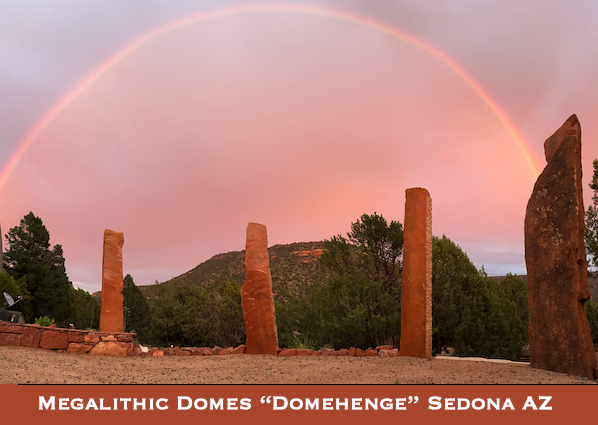 The transition to Sedona is not an ending, but the beginning of an exciting new chapter. Located among Sedona’s unique red rock landscape, Megalithic Domes LLC has invited and welcomed the CUYA INSTITUTE to make this site, this facility, its new home and global headquarters for sacred practice. This dynamic and beautiful small town with a wide-reaching reputation for sacred work of all kinds has given us a very warm welcome.
In the two decades since the passing of Dr. Felicitas Goodman, CI’s directors, Paul and Laura Lee Robear and our Board of Directors have continued nurturing and expanding this work through in-person and online workshops, trainings, ceremonies, research initiatives, writings, and global outreach. Our growing international community is the living continuation of that commitment — carrying the work forward into a new era while remaining rooted in the foundational principles of direct experience, embodied wisdom, and sacred relationship with life.
Throughout history, sacred traditions have continually adapted to new landscapes while preserving the essence of their purpose. In that same spirit, CUYA continues as a place of renewal — where ancient practices and contemporary seekers meet in living dialogue.
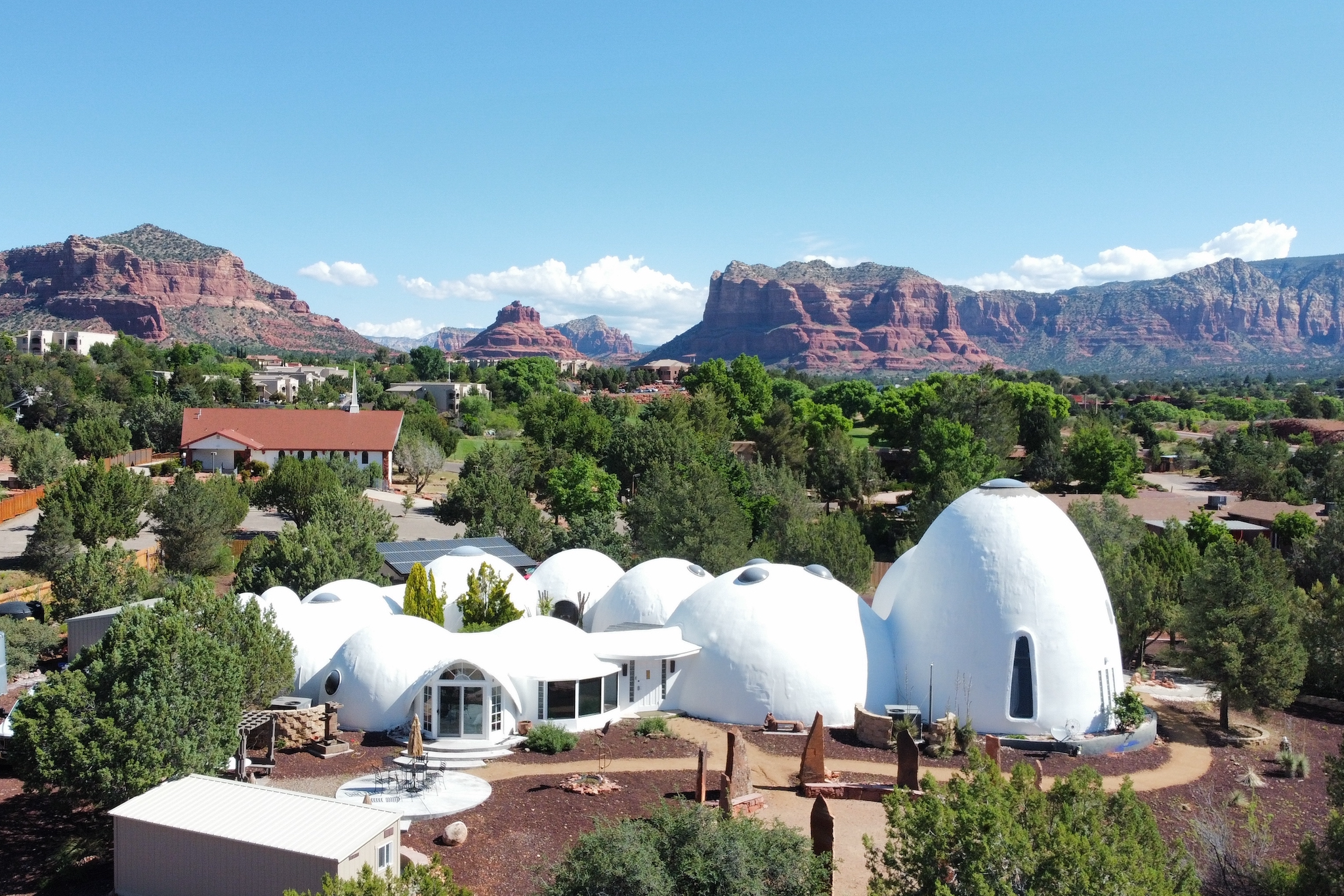 The Megalithic Domes as a facility, (10 domes in a circle) in its architecture alone, offers a striking and evocative setting for this unfolding chapter. We’ve dedicated one of the largest domes to our ritual tools and sacred experiential work. We’ve added a 30-foot Labyrinth surrounded by 9-foot tall natural stone columns, a dance court with May Pole (a long-standing CI tradition) medicine wheels, multiple indoor and outdoor gathering areas, water fountains, and more — all surrounded by Sedona’s powerful geological formations and vortexes and expansive desert skies. Our new home invites reflection, presence, creativity, and communion with the mystery of existence.
This new chapter is being shaped by place, and most importantly, by community — by all those who have walked with CI through the years and by those newly discovering this work. As the institute evolves, its essential mission remains unchanged: To support humanity’s direct experience of sacred presence, expanded awareness, healing, and meaningful connection with the greater web of life.
So, the journey continues. You are invited to join CUYA INSTITUTE’S ongoing programs and events:
And we welcome all who feel called to be part of what is emerging at CUYA in Sedona.
STAY in-touch for updates and schedules with our newletter
With gratitude and anticipation,
Paul & Laura Lee Robear
Directors
Cuyamungue Institute / CUYA
 The name “CUYA” carries with it both history and vision. Rooted in our origins as the Cuyamungue Institute, it now also serves as an acronym — C.U.Y.A. — a guiding symbol that unites our mission:
C — Consciousness: The field of shared awareness that arises in Collective Presence, where the “We” awakens beyond the “I” – moving from the “Me to the We.”
U — Unity: Our alignment with the Cycles of Nature and the rhythms of the cosmos, reminding us that we are woven into a greater fabric of reality. This sense of unity reminds us that our awareness is the shared consciousness that connects all living beings.
Y — Your Awakening: The inner journey of Embodiment and Wisdom, where through direct experience the body remembers. At the CUYA Institute, this awakening is nurtured through Ritual Body Postures and ecstatic trance, where the body itself becomes the doorway to wisdom, presence, and transformation.
A — Ancestral Wisdom: Roots. Our connection to Sacred Lineage, honoring those who walked before us and rooting us in belonging and continuity. Our founder, anthropologist Felicitas D. Goodman looked to some of the oldest, most authentic ancestral records we have — the world’s collection of early and indigenous art — and decoded selected artifacts as embodied “ritual instructions.”
Together, the Four Pathways of C.U.Y.A. — Consciousness, Unity, Your Awakening, and Ancestral Wisdom — form a single tapestry of practice. They remind us that awakening is not an abstract idea but something we live: through the body in Your Awakening, through nature’s cycles in Unity, through community in shared Consciousness, and through the guidance of Ancestral Wisdom.