As I was bouncing around the web recently, exploring ideas about spiritual embodiment that seemed to extend naturally from our work with Ritual Postures, a familiar phrase kept appearing: Mind, Body, and Spirit. These words have become so common that they are easy to pass over. Yet something about encountering them again caught my attention. I wanted to revisit what they meant to me when I first began my own exploration and how that understanding has grown through years of experience.
Within these three words is a continuing human story: our effort to understand ourselves and discover how to live with greater wholeness. The relationship between our thoughts, feelings, and physical experience has interested philosophers, spiritual teachers, and healers for centuries. It makes sense to me that what we carry emotionally can influence how we feel physically, and that the condition of our bodies can influence our thoughts and emotions.
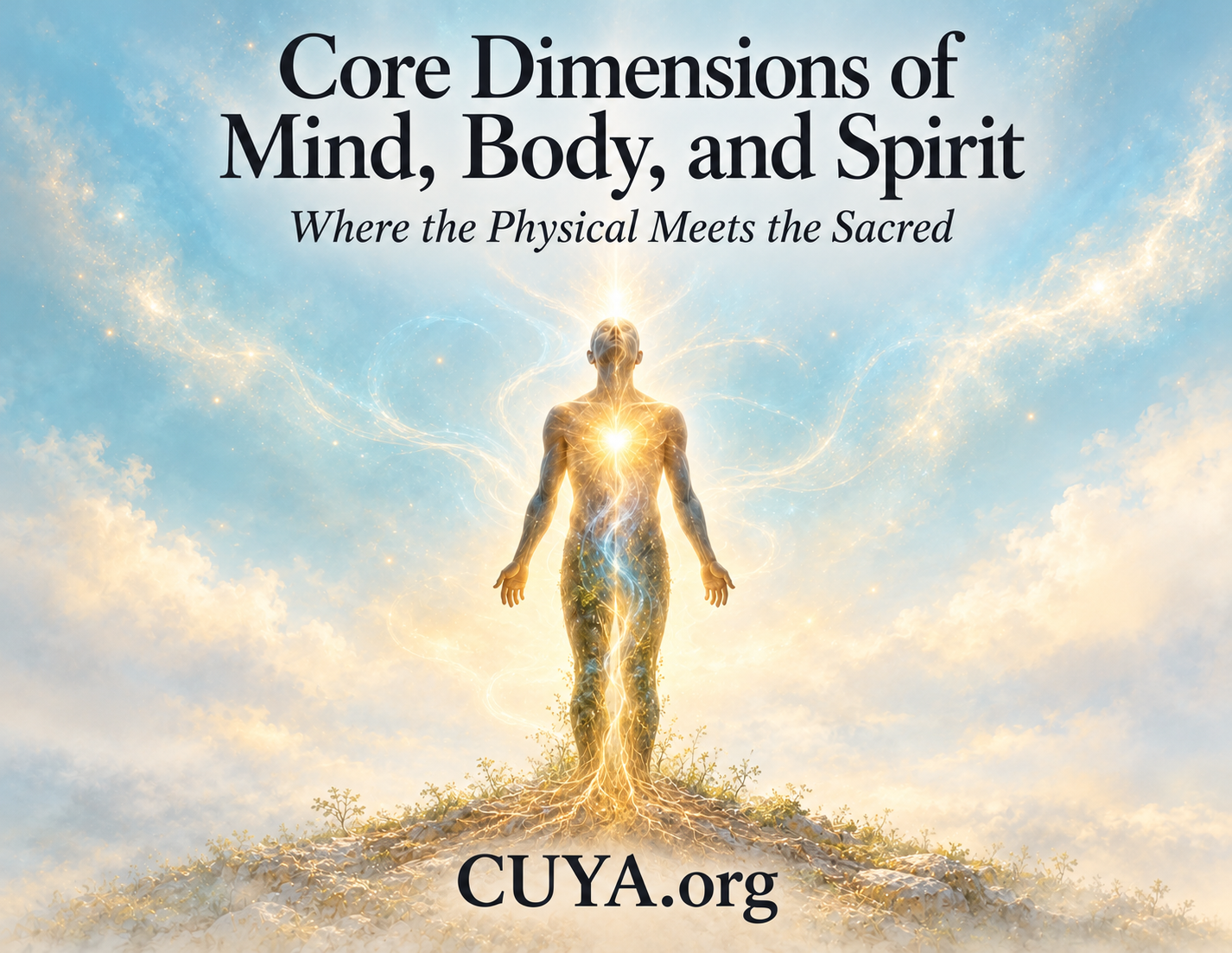
For me, the body, mind, and spirit are best described as dimensions of one living person. The body gives us sensation, movement, and our physical relationship with the world. The mind helps us interpret experience, imagine possibilities, remember, and make choices. Spirit speaks to meaning, purpose, and our relationship with something greater than ourselves.
Where does the soul fit within this understanding? Is it another word for spirit, or does it describe something more individual and specific? For me, the soul is who we are at our deepest personal level, holding our feelings, memories, and the qualities that make each of us unique. It connects our physical life with our inner experience. Spirit is the part of us that reaches beyond our individual identity and connects us with the divine. I see soul and spirit as closely related: the soul carries our individual story, while spirit connects us with the greater mystery we belong to.
What interests me most is how these dimensions participate in everyday life. Our values need expression through our choices. Our ideas need attention to the physical and emotional conditions in which they arise. Our spiritual aspirations become meaningful through how we listen, care, and respond to others.
Moving from understanding this relationship to experiencing it asks something of our attention. We can begin by feeling the body from within: the rhythm of breathing, the weight of our feet against the floor, the tension we have been carrying without noticing. There is information here that we can overlook when we are occupied with explaining ourselves.
This has become central to the work Laura and I share through the Institute. In Ritual Body Postures, we explore what happens when a particular physical position is brought together with rhythmic sound and ritual. In our work, we use selected static postures to act as a structural “antenna” that triggers specific, repeatable shifts in consciousness and ecstatic trance.
Years ago, while hosting our nationally syndicated radio program, we also became interested in Cross-Crawl exercises. These involve movements such as bringing the right hand toward the left knee, then reversing sides. The deliberate coordination offered another way to consider the relationship between movement and attention.
I remain interested in that practical invitation: to bring awareness into something we are physically doing. We can explore how a movement feels, how much concentration it asks of us, and whether our attention changes as we continue. Such insights provide a starting point for developing structured practices aimed at balancing the brain or harmonizing its hemispheres.
For me, this connection among mind, body, and spirit is at the heart of a spiritual path. The guidance of Spirit helps orient our lives. Thoughts and emotions alert us to our needs and relationships, while also asking for reflection. Our bodies allow us to participate in all of it. Integrated practice finds a place in caring for the whole person.
As we mature, we adapt and flow with all the changes we experience throughout a lifetime. There are times when the body needs more attention, when grief asks to be heard, or when our sense of purpose needs renewal. Wholeness includes change. We can respond to what needs care while being anchored within ourselves.
Mind-body-spirit integration connects your thoughts, your body, and your inner self, promoting spiritual well-being and overall health and wellness. Through life choices and embodied practices, mind-body-spirit integration is where we become whole.



 As a 501(c)(3) nonprofit educational organization, we depend on your support to continue our work. We invite you to join our community and be part of this ongoing journey of exploration and discovery. more….
 The name “CUYA” carries with it both history and vision. Rooted in our origins as the Cuyamungue Institute, it now also serves as an acronym — C.U.Y.A. — a guiding symbol that unites our mission: