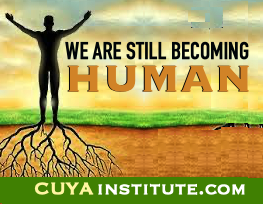
I often hear discussions about “early humans” as though they represent an unfinished version of ourselves, people who lived before humanity had fully arrived. We imagine a long evolutionary journey from primitive beginnings toward the modern human being, as if somewhere along the way the process was completed. However, evolution continues, and we are still becoming human.
Throughout our marriage, Laura and I have shared this exploration of what it means to be human, looking not only toward the future, but also toward the experiences, knowledge, and practices of those who came before us.
Our brains and bodies are, in many fundamental ways, much the same as those of our ancestors who lived thousands of years ago. Our instincts were shaped in small communities, close to the land, where survival depended upon direct awareness of our surroundings and intimate relationships with the people around us. Yet the world we inhabit today would be almost unimaginable to them. Many of us now spend our lives surrounded by technologies, institutions, and environments that did not exist even a few generations ago.
The biggest shift I see is that the pace of change has become extraordinary. Technology now changes faster than our bodies, instincts, social structures, and even our consciousness can adapt. We can access more information in a few moments than previous generations could encounter in a lifetime. Artificial intelligence is altering how we work, communicate, create, and even how we think about intelligence itself.
Yet beneath all of this, we still function with ancient nervous systems, experiencing fear, belonging, love, curiosity, and the need to find meaning. We respond to the world emotionally and physically, often before we have time to reason our way through it. One of the central challenges of our time, as I see it, is learning how to live within this widening gap between our ancient biology and the rapidly accelerating world we have created.
For most of human history, adaptation occurred slowly. Changes in the environment shaped our bodies and behaviors across countless generations. Today, much of our evolution takes place in a different way. We adapt through ideas, language, culture, and the knowledge, stories, technologies, and tools we pass from one generation to another. A child born today enters a world profoundly different from the one into which their grandparents were born. They do not need a different body to inhabit that world, but they may need different ways of thinking, relating, communicating, and understanding themselves.
This raises an interesting question: If we have become extraordinarily skilled at creating new technologies, have we become equally skilled at becoming the kind of humans capable of using them wisely?
Our inventions extend our reach, but they do not automatically expand our wisdom. We have devoted enormous energy to the development of knowledge and technology, but we also need to place greater attention on the development of wisdom. Becoming human requires more than intelligence. It also requires the continued development of awareness, discernment, and a deeper understanding of how our actions affect one another and the world around us.
This is where the past still has something important to offer us. Our ancestors developed ways of creating meaning, sustaining communities, relating to the natural world, and exploring dimensions of human experience that we may have neglected in our rush toward progress. Their knowledge was different from ours, but different does not necessarily mean inferior.
As we move further into a technological future, I wonder what steps we need to take to become more conscious of what we are leaving behind as well as what we are creating. The question is not simply how quickly we can adapt to the technologies of tomorrow, but whether our human capacities can develop alongside them.
I think this helps explain the growing interest in mindfulness, meditation, and other practices intended to bring us back into the present moment. In an increasingly fast and digitally connected world, people are searching for ways to step away from the constant demands for attention, quiet the mind, and reconnect with themselves. These practices are, at least in part, a response to the pace of modern life.
Through our shared work with Ritual Postures, Laura and I have seen something similar. People who spend much of their lives in a world of constant activity and stimulation are invited to become still, to place their bodies into a posture inspired by an ancient artifact, accompanied by rhythmic sound. The experience offers a striking contrast to much of contemporary life. Rather than adding more information, more stimulation, or another technology, the practice asks us to pay attention to the experience of being present in our own bodies.
We find this particularly interesting because these practices represent more than simply an escape from the stresses of modern life. They remind us of capacities that have always been part of being human: the ability to focus our attention, to become deeply aware of our bodies, to enter into shared experience, and to explore aspects of consciousness that cannot always be reduced to information or explanation.
As Laura and I continue this journey together, these questions have become increasingly important to us. We are still biological beings living inside an increasingly technological civilization. We carry ancient instincts into digital environments and are learning to navigate forms of communication, relationships, and intelligence that no previous generation has encountered.
This, to me, is what it means to be human now: not to imagine that we have arrived at the final stage of human development, but to recognize that humanity remains unfinished.
We are still learning how to live together, how to use the power we create, and what consciousness may be capable of. We are still searching for ways to balance knowledge with wisdom, individuality with community, and technological progress with the deeper needs of human beings.
Humanity is not a finished product but an ongoing process of physical mental and spiritual growth. We are still evolving, not only through changes in our bodies, but through the ideas we share, the stories we tell, the tools we create, and the choices we make.
The future of humanity may depend less on what we become capable of creating than on what we become capable of BECOMING.



 As a 501(c)(3) nonprofit educational organization, we depend on your support to continue our work. We invite you to join our community and be part of this ongoing journey of exploration and discovery. more….
 The name “CUYA” carries with it both history and vision. Rooted in our origins as the Cuyamungue Institute, it now also serves as an acronym — C.U.Y.A. — a guiding symbol that unites our mission: